
First week free
See the loads, the rates and the support before you pay your first dollar.
How to accept and hand over a vehicle, what to mark on the BOL and what to do if damage is found anyway.
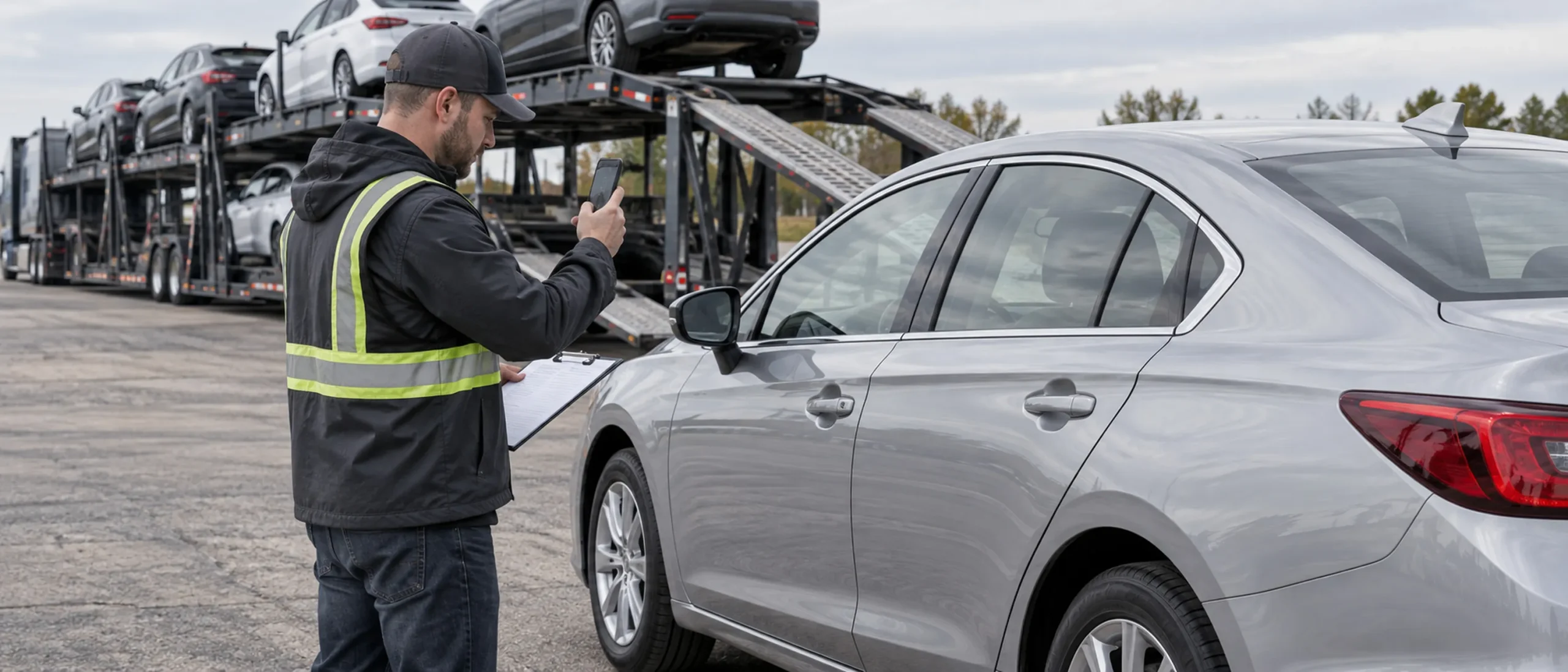
A damage claim rarely starts with actual damage. More often it starts because nobody marked the scratch at pickup and it was spotted at delivery. From there the dispute isn't about the car but about paper: who wrote down what.
The bill of lading is at once a contract of carriage, a receipt for the cargo and an inspection report. It records the VIN, the condition of the vehicle at pickup and its condition at delivery. Signatures from both sides turn it into the document the insurer looks at.
Shoot so the frame speaks for itself
The frame should show the date and place, the plate or VIN and a wide shot of the car next to the trailer. A standalone photo of a scratch with no link to the vehicle and the time proves nothing.
Unload in good light and without rushing, together with the receiver. Let them walk around the car before signing. If there is damage, it goes into the BOL right away, before signatures – otherwise it becomes your word against theirs. A clean BOL signed with visible damage closes the question against you.
The electronic form is more convenient than paper: photos attach to the record, the signature is captured on screen, a copy reaches the broker immediately. One rule stays the same – you must have a copy of your own, separate from someone else's app. Access to a carrier's system disappears exactly when the document is needed.
Inspection discipline costs ten minutes per vehicle and closes most disputes. For premium and collector cars an enclosed trailer is added on top: how that transport and its photo documentation work is described on the enclosed page.
First week free
See the loads, the rates and the support before you pay your first dollar.
Car hauling business
What makes up a week of revenue and what is left after expenses. The formula, a worked example and three mistakes.
Read
Dispatch and brokers
Percentages, flat fees and hidden charges in the dispatch market. What is worth paying for and what isn't.
Read
Car hauling business
Paperwork, insurance, a trailer and cash reserve: the order of steps from decision to first load.
Read